Harmony and Balance: The Art of Sets in Fashion, Design, and Mathematics
The Beauty of Sets: Creating Harmony and Balance
Sets play a crucial role in many aspects of our lives, from fashion to interior design, and even in mathematics. The concept of sets revolves around the idea of grouping similar or related items together to create a sense of harmony and balance.
In Fashion
In the world of fashion, sets are often seen as coordinated pieces that are designed to be worn together. Matching tops and bottoms, such as skirts and blouses or trousers and shirts, create a cohesive look that exudes style and sophistication. Sets in fashion allow individuals to effortlessly put together an outfit without worrying about mixing and matching different pieces.
In Interior Design
Interior designers frequently use sets to bring a sense of unity to a space. Matching furniture sets, such as living room suites or bedroom ensembles, can tie a room together and create a cohesive aesthetic. By using sets in interior design, designers can establish a visual theme that flows seamlessly throughout the space.
In Mathematics
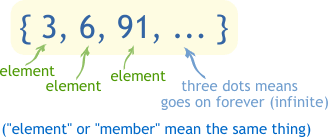
Mathematicians use sets to categorise objects with similar characteristics. A set is defined as a collection of distinct objects, considered as an object in its own right. Sets are fundamental in various branches of mathematics, including algebra and calculus, where they help organise data and simplify complex problems.
Whether in fashion, interior design, or mathematics, the concept of sets plays a significant role in creating order, harmony, and balance. By grouping related items together, we can achieve coherence and unity that enhance our experiences in various aspects of life.
Understanding Sets: Six Essential Tips for Mastery
- Ensure that each element in a set is unique.
- Use curly braces { } to denote a set in mathematics.
- Sets can be finite or infinite.
- The order of elements in a set does not matter.
- The cardinality of a set refers to the number of elements it contains.
- A subset is a set that contains only elements found in another set.
Ensure that each element in a set is unique.
When working with sets, it is essential to ensure that each element within the set is unique. This means that no two elements in the set should be the same, emphasising individuality and distinctiveness. By maintaining this rule, sets can effectively categorise and organise objects based on their unique characteristics, promoting clarity and precision in various applications such as mathematics, data analysis, and classification systems.
Use curly braces { } to denote a set in mathematics.
In mathematics, curly braces { } are commonly used to denote a set. By enclosing elements within curly braces, mathematicians define a collection of distinct objects as a single entity. This notation helps clarify the boundaries of a set and distinguish it from other mathematical concepts. The use of curly braces in representing sets provides a clear and concise way to organise and categorise elements based on their shared characteristics within the realm of mathematics.
Sets can be finite or infinite.
Sets can be categorised as either finite or infinite, depending on the number of elements they contain. A finite set has a specific and countable number of elements, while an infinite set contains an endless number of elements. Understanding this distinction is crucial in mathematics and other fields where sets are utilised, as it influences how we approach and manipulate data within the set. The concept of finite and infinite sets adds depth to our understanding of collections of objects and their properties, allowing for more nuanced analysis and problem-solving strategies.
The order of elements in a set does not matter.
In the realm of sets, a fundamental principle to grasp is that the order of elements within a set holds no significance. Whether the elements are listed in a particular sequence or not, a set remains unchanged as long as it contains the same distinct objects. This concept allows for the simplification and standardisation of data representation, highlighting the essence of sets in categorising and organising elements based on their intrinsic properties rather than their arrangement.
The cardinality of a set refers to the number of elements it contains.
In the realm of set theory, the cardinality of a set is a fundamental concept that denotes the count or number of elements within that particular set. It serves as a crucial measure to quantify the size or magnitude of a set, providing valuable information about the extent of its elements. Understanding the cardinality of a set enables mathematicians and researchers to analyse and compare sets based on their respective sizes, leading to deeper insights into various mathematical structures and relationships.
A subset is a set that contains only elements found in another set.
In the realm of set theory, a subset is a fundamental concept that describes a set containing only elements that are also present in another set. Essentially, when one set is identified as a subset of another, it means that all the elements of the former are included within the latter. This relationship between sets allows for the classification and organisation of data based on common characteristics, providing a structured framework for analysing relationships and patterns within collections of objects.
Related Post

Mastering Success: The Key Role Focuses Play in Achieving Goals
The Power of Focus: Achieving Success Through Concentration Focus is a fundamental element in the [...]